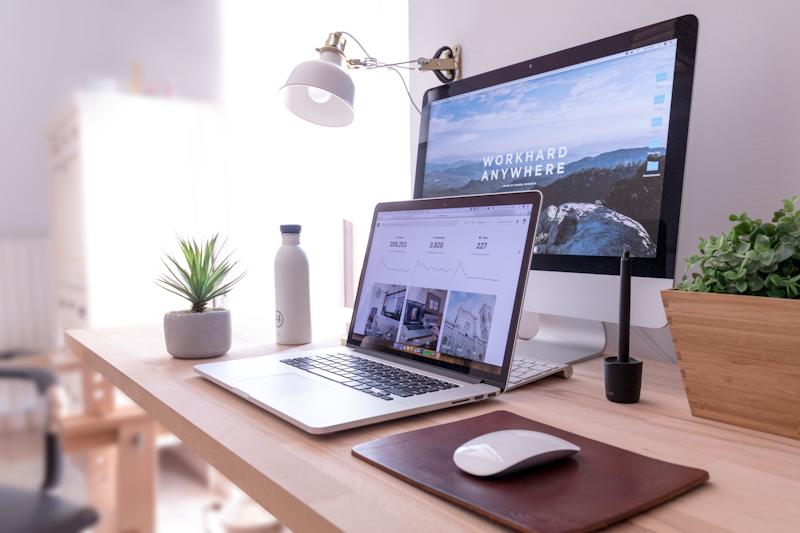
Stepping into a messy, cluttered physical office is stressful, yet we tolerate digital desktops crowded with random screenshots and chaotic folders.
Your digital screen is a workspace that heavily affects your subconscious focus. Start by hiding all desktop icons, relying on clean search queries to launch files.
Use minimalist, distraction-free markdown editors that run full-screen, fading away all navigation sidebars to let you focus purely on the text.
By keeping your active browser tabs limited to three and scheduling a weekly digital declutter, you create an ambient, restful digital home built for deep thinking.
Ultimately, technology should serve as a high-precision tool that extends our creative capabilities, rather than a passive entertainment engine that consumes our lives. When we use technology with clear intent—whether to write a thoughtful article, design a beautiful application, or connect deeply with a loved one across the globe—it becomes a source of empowerment and connection. By maintaining a conscious, active stance in our relationship with digital tools, we ensure that technology remains a supportive asset on our journey toward a more mindful, intentional way of living.
As we navigate a world increasingly dominated by continuous digital feeds and highly optimized predictive algorithms, the practice of intentional digital hygiene is essential for the preservation of our mental autonomy and cognitive freedom. Our attention is a finite, precious resource, yet modern technology platforms are specifically designed to capture and monetize it through endless scrolling and high-frequency notifications. By consciously establishing boundaries around our technology use, we reclaim our cognitive sovereignty and protect our capacity for deep, uninterrupted thought.
Carving out 'offline oases' in our daily lives allows our nervous systems to recover from the constant state of hyper-arousal induced by screen stimulation. An offline oasis can be a physical room in our home kept entirely free of digital devices, or a designated block of time—such as the first hour of the morning or the last two hours of the evening—where we completely disconnect from the internet. In these quiet, analog spaces, we can reconnect with physical hobbies like reading, writing, sketching, or gardening, allowing our minds to settle and find their natural, unforced focus.
Furthermore, the design of our digital workspaces has a significant impact on our daily mental state. A cluttered desktop, hundreds of unread emails, and multiple open browser tabs can create a subtle, continuous sense of cognitive friction and low-level stress. By actively curating our digital environments—decluttering our files, organizing our desktops, and using minimalist, distraction-free writing tools—we create a sense of digital spaciousness that supports focused, high-integrity creative work and mental clarity.
We must also cultivate a more mindful, deliberate relationship with the information we consume. Instead of passively absorbing a continuous stream of sensationalized, high-frequency news and social media content, we should practice conscious informational curation. This means seeking out long-form, high-integrity reporting, reading books that offer deep context, and limiting our consumption of quick, reactive updates. This slower, more thoughtful consumption model helps us build a more balanced, accurate understanding of the world while preserving our mental peace.
Ultimately, technology should serve as a high-precision tool that extends our creative capabilities, rather than a passive entertainment engine that consumes our lives. When we use technology with clear intent—whether to write a thoughtful article, design a beautiful application, or connect deeply with a loved one across the globe—it becomes a source of empowerment and connection. By maintaining a conscious, active stance in our relationship with digital tools, we ensure that technology remains a supportive asset on our journey toward a more mindful, intentional way of living.
As we navigate a world increasingly dominated by continuous digital feeds and highly optimized predictive algorithms, the practice of intentional digital hygiene is essential for the preservation of our mental autonomy and cognitive freedom. Our attention is a finite, precious resource, yet modern technology platforms are specifically designed to capture and monetize it through endless scrolling and high-frequency notifications. By consciously establishing boundaries around our technology use, we reclaim our cognitive sovereignty and protect our capacity for deep, uninterrupted thought.
Carving out 'offline oases' in our daily lives allows our nervous systems to recover from the constant state of hyper-arousal induced by screen stimulation. An offline oasis can be a physical room in our home kept entirely free of digital devices, or a designated block of time—such as the first hour of the morning or the last two hours of the evening—where we completely disconnect from the internet. In these quiet, analog spaces, we can reconnect with physical hobbies like reading, writing, sketching, or gardening, allowing our minds to settle and find their natural, unforced focus.
Furthermore, the design of our digital workspaces has a significant impact on our daily mental state. A cluttered desktop, hundreds of unread emails, and multiple open browser tabs can create a subtle, continuous sense of cognitive friction and low-level stress. By actively curating our digital environments—decluttering our files, organizing our desktops, and using minimalist, distraction-free writing tools—we create a sense of digital spaciousness that supports focused, high-integrity creative work and mental clarity.